In the ever-evolving smartphone landscape, brands continuously innovate to deliver greater performance, camera quality, and user experience within competitive price segments. Xiaomi’s Redmi Note series has long been at the forefront of budget-friendly innovation, and the comparison between the Redmi Note 7 and the Redmi Note 8 is a relevant reflection of how technology is progressing for the everyday user. While both models offer impressive features for their respective release times, the question remains—between the Redmi Note 7 and the Redmi Note 8, which offers a more compelling package in 2025?
This analysis aims to provide a deeper understanding of both models, considering design, display, camera, performance, and battery life. It also aligns with broader shifts in digital marketing trends and how smartphone makers communicate these differences to consumers in an era shaped by the future of marketing and emerging marketing technologies.
Design and Display: Refinement in Aesthetics and Function
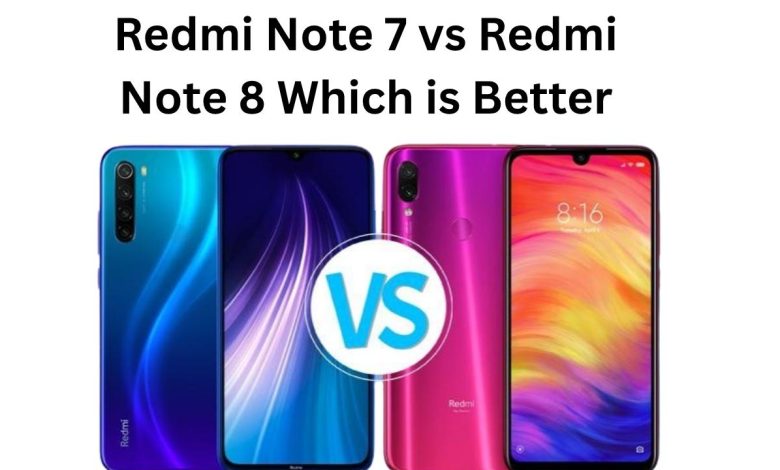
When evaluating smartphones, design and display are critical components of the user experience. The Redmi Note 7 introduced a solid design with Gorilla Glass 5 on both the front and back, presenting a premium feel at an affordable price point. It features a 6.3-inch IPS LCD display with a resolution of 1080 x 2340 pixels, making it suitable for media consumption and daily use.
The Redmi Note 8 retained much of the previous generation’s design elegance but with subtle improvements. The bezels were slightly reduced, and the overall look became sleeker. The Note 8 also uses a 6.3-inch display with similar resolution and Gorilla Glass 5, yet the improved color calibration and higher screen-to-body ratio create a more immersive visual experience. From a design and ergonomics perspective, the Redmi Note 8 edges ahead with refinements that reflect Xiaomi’s responsiveness to consumer feedback and design trends in mobile marketing.
As smartphone presentation becomes a powerful narrative in digital campaigns, design upgrades are now a key part of emerging marketing technologies. Augmented reality previews, interactive 3D models, and immersive product pages illustrate how design is communicated to audiences using tools aligned with future marketing strategies.
Camera Capabilities: A Leap Forward in Mobile Photography
Photography has become central to smartphone value, and Xiaomi responded to this trend by significantly upgrading camera hardware between the Redmi Note 7 and Note 8. The Redmi Note 7 features a dual-camera system with a 48MP main sensor and a 5MP depth sensor. This configuration was impressive during its launch, offering crisp details and respectable portrait mode capabilities.
The Redmi Note 8, however, expanded this further by introducing a quad-camera setup: a 48MP main sensor, 8MP ultra-wide lens, 2MP macro camera, and 2MP depth sensor. The addition of an ultra-wide and macro lens makes the Note 8 far more versatile for content creators, travelers, and social media enthusiasts. Image clarity in daylight and improved low-light performance further support its edge in mobile photography.
These enhancements are not just technical but are increasingly featured in how smartphone brands align with digital marketing trends. Product pages and launch campaigns focus heavily on photographic potential, using real-time image comparisons, user-generated content, and influencer-based campaigns. This shift reflects the growing role of visual storytelling in the future of marketing and illustrates how emerging marketing technologies are shaping smartphone user expectations.
Performance and Battery Efficiency: User-Centric Optimization
Under the hood, both smartphones are powered by Qualcomm Snapdragon chipsets. The Redmi Note 7 features the Snapdragon 660, while the Note 8 comes with the upgraded Snapdragon 665 processor. Although both are efficient, the Snapdragon 665 delivers better power management, enhanced AI capabilities, and improved GPU performance, especially noticeable in gaming and multitasking scenarios.
Battery capacity remains similar in both models at around 4000mAh, and both support 18W fast charging. However, the optimization of the Note 8 results in slightly better screen-on time, reflecting advancements in system software and thermal management. While the difference may not be stark in everyday use, users engaged in streaming, mobile gaming, or productivity will appreciate the smoother experience offered by the newer chipset.
As users increasingly engage with mobile apps for productivity, shopping, and entertainment, performance becomes a priority. Smartphone brands now integrate these technical improvements into broader digital marketing narratives. AI benchmarking, user behavior analytics, and adaptive UI demos exemplify how performance is showcased using emerging marketing technologies that personalize the consumer journey and reinforce buying decisions.
Software and Long-Term Usability in a Digital Ecosystem
The Redmi Note 7 originally launched with MIUI based on Android 9, while the Note 8 debuted with Android 9 but received better software support over time, including updates to MIUI 12 based on Android 11. This extended support makes the Note 8 more future-proof in terms of security, features, and app compatibility.
From a long-term usability perspective, software longevity plays a significant role in a device’s relevance. The smartphone’s ability to receive timely updates aligns with a broader ecosystem that now includes IoT devices, smart assistants, and productivity tools. As we see digital marketing trends evolving, ecosystem integration is becoming a major selling point, where tech companies focus on creating seamless user experiences across multiple devices. This narrative resonates with the future of marketing, where interoperability, security, and intelligent assistance are key messaging pillars.
Conclusion
While both the Redmi Note 7 and Note 8 are commendable smartphones within the budget segment, the Redmi Note 8 emerges as the more future-ready device. It offers improved camera versatility, better processing power, refined design, and longer software support—all factors that contribute to a better overall user experience. As digital marketing trends continue to highlight user-centric design and ecosystem integration, the Redmi Note 8 stands out not just as a successor, but as a representation of how user expectations and marketing technologies are evolving in tandem.
Smartphone brands are no longer just competing on specifications but on how effectively they communicate value. With the growing influence of emerging marketing technologies and the future of marketing pointing toward personalization and interactivity, devices like the Redmi Note 8 gain visibility and traction not just by hardware but by the stories brands build around them.